
Wellness has become surprisingly easy to feel behind on.
There is always another habit someone recommends, another morning routine that promises greater focus, another supplement to try, another tracker to download, another list explaining what a healthy day should look like. Advice is everywhere, and much of it comes from a genuine desire to help. Yet when every suggestion becomes another expectation, wellbeing can begin to feel less like care and more like another standard to meet.
Many people do not struggle because they know too little about wellness. They struggle because they are trying to do too much of it.
Drink more water.
Sleep earlier.
Exercise every day.
Practice gratitude.
Journal regularly.
Meditate.
Reduce screen time.
Cook from scratch.
Take supplements.
Spend time in nature.
Protect your peace.
None of these habits is unreasonable on its own. In fact, many are supported by good evidence and can make a meaningful difference over time.
The problem begins when they are treated as a checklist that must be completed before a person can believe they are taking proper care of themselves.
Instead of creating space to feel better, wellness quietly becomes another source of pressure.
A missed workout starts to feel like failure.
An evening spent ordering takeout becomes something to feel guilty about.
Missing a few days of journaling creates the impression that the routine has been ruined.
Even rest begins to require effort, planned carefully between meetings and responsibilities, until it no longer feels like rest at all.
This way of thinking is understandable.
Many areas of life reward achievement. School encourages measurable progress. Careers often celebrate productivity, promotions, and performance. Goals provide direction, and discipline helps people accomplish meaningful things.
It is easy to assume wellness works in exactly the same way.
It often does not.
Unlike many goals, wellbeing is not something that is permanently completed.
There is no finish line where a person finally becomes healthy enough, calm enough, mindful enough, or balanced enough to stop paying attention.
Wellness behaves more like tending a garden than completing a project.
A garden is never finished.
It changes with the seasons. Some weeks require more attention than others. Sometimes growth is obvious. Other times, very little seems to happen despite consistent care. There are periods of abundance and periods of pruning. Rain helps. So does sunshine. Neither can be controlled.
The value comes from returning to the garden anyway.
Human wellbeing follows a similar rhythm.
There will be seasons when nourishing meals come naturally and movement feels enjoyable. There will also be weeks when work becomes demanding, sleep is interrupted, family responsibilities increase, or unexpected challenges leave little energy for carefully planned routines.
Those seasons are not evidence that wellness has been lost.
They are part of living.
One of the quiet risks of modern wellness culture is that it sometimes encourages people to measure their wellbeing by the consistency of their habits rather than the quality of their relationship with themselves.
A routine can certainly support health.
It can also become another reason to criticize oneself.
Missing one meditation session does not erase weeks of thoughtful practice.
Choosing convenience during an exhausting week is not the same as abandoning health altogether.
Eating birthday cake at a family celebration does not undo years of balanced meals.
Life is larger than any individual habit.
Perhaps the more helpful question is not, “Did everything go according to plan today?”
Perhaps it is, “What kind of care was possible today?”
The answer will not always look the same.
On one day, care may look like preparing a nourishing dinner and taking a long evening walk.
On another, it may simply mean eating something before the afternoon slips away, drinking enough water, and choosing sleep over one more task.
Both are forms of care.
Neither deserves to be dismissed simply because it looks different from the ideal.
Wellness was never meant to become another competition.
Nor was it meant to become another reason to believe a person is falling behind.
Its purpose is much quieter than that.
It exists to support life, not to become life itself.
If wellness is not another achievement, then it asks for a different way of measuring progress.
Many people are accustomed to looking for visible results. A completed checklist feels satisfying because it provides proof that something has been accomplished. It is much harder to recognize the quieter changes that happen over time. Feeling slightly more patient during a difficult conversation rarely appears on a habit tracker. Choosing to pause before reacting to stress does not earn a badge. Sleeping more deeply after several weeks of consistent routines is easy to overlook because the change is gradual.
Yet these are often the changes that matter most.
Wellbeing rarely announces itself through dramatic transformation. More often, it appears in ordinary moments that begin to feel a little easier than they once did. The mind settles more quickly after a stressful day. Rest no longer feels something that must be earned. A difficult week no longer leads to abandoning every healthy habit. Small acts of care begin to feel familiar rather than forced.
This kind of progress is easy to miss because it does not ask for attention.
It quietly becomes part of daily life.
There is also wisdom in recognizing that every season asks for something different.
The routines that support someone during a quiet month may not be realistic during exam season, the arrival of a new baby, a demanding work project, or while caring for a loved one. Expecting wellness to look identical throughout every stage of life often creates unnecessary disappointment.
A more sustainable approach begins by asking a simpler question.
What is supportive right now?
The answer may change.
During one season, it might be preparing balanced meals and enjoying regular walks outdoors. During another, it may simply be remembering to eat lunch, stepping outside for a few minutes of fresh air, or choosing an earlier bedtime instead of finishing one more task.
Neither season is more successful than the other.
Each reflects a different reality.
Wellness becomes much kinder when it adapts to life instead of demanding that life adapt perfectly to it.
This is also why comparison can quietly undermine wellbeing.
It is easy to look at someone else’s morning routine, exercise habit, or carefully organized home and wonder why personal routines feel so much harder to maintain. What often remains unseen are the differences in responsibilities, health, family life, work schedules, finances, personality, and available support.
A routine that brings peace to one person may create pressure for another.
There is no universal formula for living well because there is no universal life.
Thoughtful wellbeing begins with paying attention to individual needs rather than trying to imitate someone else’s rhythm.
This is where simple rituals often become more valuable than ambitious plans.
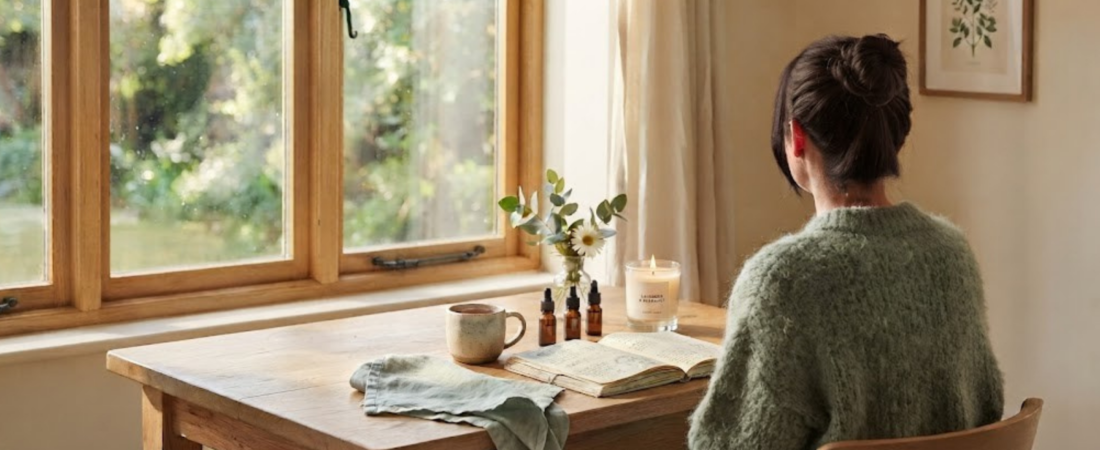
A favorite mug used each morning before the house becomes busy.
Opening the windows to let fresh air move through the rooms.
A familiar aroma that signals the end of the workday.
Writing a few lines in a journal before going to bed.
Taking several slow breaths before answering a difficult message.
None of these practices is remarkable on its own.
Together, they gently remind the mind and body that care does not always require large amounts of time, money, or energy.
It often begins with noticing.
Noticing hunger before becoming exhausted.
Noticing tension in the shoulders before it becomes pain.
Noticing the need for rest before reaching complete burnout.
Noticing joy while it is still unfolding instead of realizing its value only after it has passed.
Attention is one of the quiet foundations of wellbeing.
Without it, even the most carefully designed routines can become automatic tasks completed without presence. With it, even small moments can become opportunities to reconnect with what is needed.
Perhaps that is why wellness feels most sustainable when it stops revolving around perfection.
There will always be days when routines are interrupted, plans change, motivation disappears, or life asks for attention elsewhere. These moments are not signs that wellbeing has failed. They are reminders that wellness exists to support real life, not an ideal version of it.
The goal has never been to complete every habit perfectly.
The goal is to build a relationship with yourself that remains compassionate through changing circumstances.
Some days that relationship will look like energy and momentum.
Other days it will look like rest, flexibility, and beginning again without guilt.
Both belong.
Wellness does not ask for flawless consistency.
It asks for a willingness to return.
To return to nourishing choices after convenience has been necessary.
To return to rest after a demanding season.
To return to movement after illness.
To return to quiet after weeks filled with noise.
Returning is not failure.
Returning is the practice.
When wellbeing is no longer treated as another achievement, something unexpected begins to happen. The pressure to perform slowly gives way to permission to care. Habits become less about proving discipline and more about creating a life that feels steady, supportive, and sustainable.
That kind of wellness may never look impressive from the outside.
It is rarely meant to.
Its value is found in something much quieter: helping ordinary days feel a little lighter, a little calmer, and a little more deeply lived.
A gentle invitation
At Tawhay, wellness is not measured by perfect routines or impossible standards. It grows through small, thoughtful practices that fit into real life and change with the seasons. Whether you are creating a calming evening ritual, exploring aromatherapy for the first time, or simply looking for a quiet moment to pause, our collection is designed to support everyday wellbeing with gentleness, intention, and care.