
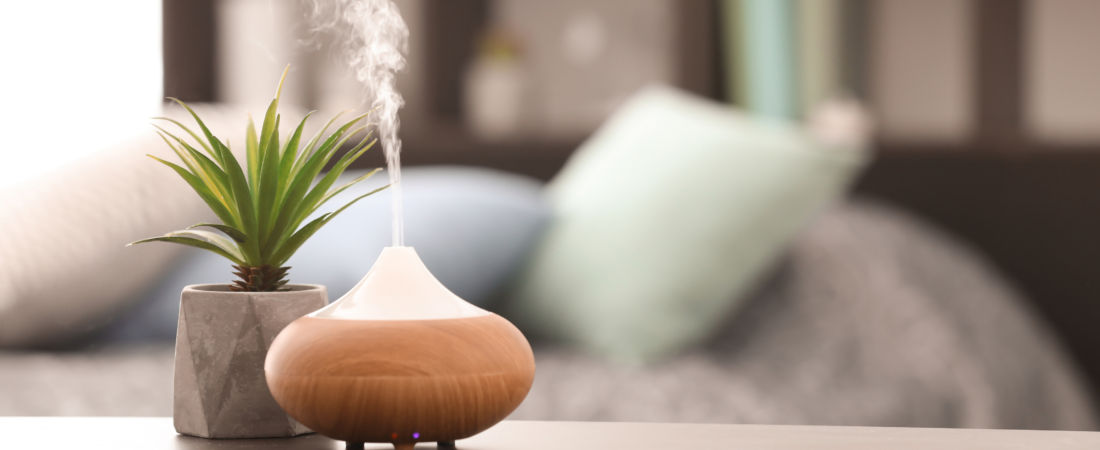
One of the questions I hear most often is surprisingly simple.
“How long should I leave my diffuser on?”
Sometimes it comes from someone who has just started exploring essential oils. Other times, it comes from people who have enjoyed aromatherapy for years but wonder if they should be doing more. The assumption is understandable. If a room feels calm after fifteen minutes of diffusing, surely leaving it on for several hours would create an even better experience.
It is an easy conclusion to reach because we often think about aroma the same way we think about music. When we enjoy a song, we play it again. When a meal tastes good, we take another serving. More often feels like the natural response to something pleasant.
Scent asks us to think differently.
Aromatherapy is less about filling a room with aroma than it is about shaping an experience. The goal is not to notice essential oils every moment of the day. It is to allow aroma to quietly support the rhythm of ordinary life.
This is one reason I rarely encourage people to keep a diffuser running from morning until bedtime. It is not because diffusers are ineffective. It is because our senses were never designed to stay fully aware of the same aroma for hours at a time.
Our sense of smell is remarkably intelligent. Every day, it sorts through thousands of pieces of information without asking us to think about it. It notices the smell of smoke before we see the fire. It tells us when milk has spoiled. It recognizes rain before the clouds have fully gathered. It remembers the perfume of someone we love, the scent of our childhood home, or the familiar smell of a favorite book.
To make room for these important signals, the brain gradually stops paying close attention to scents that remain constant. Scientists call this olfactory adaptation, although many people know it as nose blindness or olfactory fatigue.
You have probably experienced it without realizing it.
You arrive home after spending the afternoon away and immediately notice how fresh the house smells. Ten minutes later, the aroma seems to disappear. Nothing changed except your awareness. The scent is still there. Your brain has simply decided that it no longer needs your full attention.
Many people mistake this for a problem with the diffuser. They add more drops, switch to a stronger blend, or leave the diffuser running longer. In reality, the diffuser is usually doing exactly what it should. It is our perception that changes.
Understanding this small piece of science changes the way we use aromatherapy. Instead of chasing a scent that remains noticeable all day, we begin appreciating aroma as something that arrives, supports the moment, and then gently steps into the background.
There is something beautifully ordinary about that.
Think about the smell of freshly baked bread. The first few moments are rich and comforting. After spending an hour in the kitchen, you barely notice it anymore. Step outside for a while, then come back inside, and suddenly the aroma greets you again.
The same thing happens with essential oils.
This is why shorter diffusion sessions often create a more enjoyable experience than continuous aroma. Most people find that fifteen to thirty minutes is enough for the aroma to shape the atmosphere of a room. After that, allowing the diffuser to rest gives your senses the opportunity to reset before the next session.
This approach also changes the role the diffuser plays in the home.
Instead of becoming another appliance that quietly runs in the background all day, it becomes part of a routine.
Perhaps it accompanies the first cup of coffee while the morning light fills the kitchen. Maybe it runs while you journal before work or while you read for a few quiet minutes in the evening. It might welcome guests before dinner or become part of your bedtime ritual after the house has grown still.
The scent becomes attached to the experience rather than replacing it.
That distinction matters.
Sometimes people ask me which essential oil blend is best for relaxation. The truth is that the aroma is only one part of the answer. A peaceful environment is also shaped by lighting, sound, temperature, fresh air, and the habits we repeat every day. Essential oils can support those moments beautifully, but they are not meant to carry the entire responsibility for our wellbeing.
A diffuser cannot create rest if the room itself never slows down.
This is why I often encourage people to think less about how long a diffuser should run and more about the moments they want to mark with scent. The answer is rarely “all day.” More often, it is a handful of quiet moments that deserve our full attention.
Those moments are usually enough.
One of the simplest ways to make aromatherapy more enjoyable has very little to do with essential oils themselves.
Open the windows.
Fresh air changes a room in ways aroma cannot. It carries away what has become stagnant, softens lingering aromas, and gives your sense of smell the opportunity to notice something familiar again. If you have ever stepped outside for a few minutes and returned to find the scent of your diffuser suddenly noticeable once more, you have experienced this firsthand.
Our homes benefit from the same rhythm we find outdoors. Morning air feels different from the cool breeze after rain. The scent of damp soil disappears as the day warms. Nature is never static, and perhaps that is one reason it feels so refreshing. Aroma comes and goes. It has space to arrive, leave, and return again.
Our homes can follow that same rhythm. A diffuser does not need to compete with fresh air. The two often work best together.
This also invites us to think differently about what we expect scent to do. Many people hope a diffuser will make the entire house smell like their favorite essential oil. They become disappointed when they can only notice the aroma in one room or when the aroma seems to fade after a short while.
Neither is a sign that something is wrong.
A diffuser is designed to influence the space around it, not to perfume an entire home. It creates an atmosphere where you are, whether that is your reading chair, your home office, your bedroom, or the dining table where the family gathers after a long day.
There is something comforting about this smaller approach. Instead of trying to scent every corner of the house, we begin paying attention to the spaces where life is actually unfolding. The aroma becomes part of that particular moment rather than a constant presence demanding to be noticed.
The people sharing that space matter too.
aroma is deeply personal. A blend that feels fresh and uplifting to one person may feel much stronger to someone else. Age, health conditions, pregnancy, allergies, medications, and even a recent cold can influence how aroma is experienced. Some people naturally enjoy subtle scents, while others become uncomfortable when aroma lingers for too long.
Children deserve additional consideration because their bodies are still developing. The same is true for older adults, individuals with respiratory conditions, and our pets. Essential oils are powerful plant extracts, and thoughtful use means considering everyone who shares the environment, not only the person choosing the blend.
This is one reason moderation often becomes the safest and most pleasant choice.
A room gently scented for twenty minutes is usually more comfortable than one carrying a strong aroma throughout the day. The goal is not to create the strongest possible aroma. It is to create an environment where people feel at ease.
This idea extends beyond diffusers.
The same principle applies when lighting a candle, using a room spray, or adding aroma to a personal ritual. Sometimes we believe consistency means keeping the scent present at all times. In reality, consistency is often built through repetition rather than duration.
A candle lit while you prepare dinner each evening becomes part of the rhythm of home. A room spray used before guests arrive creates a familiar welcome. A diffuser switched on while you read for half an hour quietly marks the beginning of rest.
These rituals gain meaning because they happen again and again.
Eventually, the scent itself becomes a gentle reminder of what usually follows. Your mind begins connecting that familiar aroma with slowing down, gathering together, or ending the workday. The aroma has become part of a habit, and habits often shape our wellbeing more deeply than occasional grand gestures ever could.
This is one reason I appreciate the quieter side of aromatherapy.
It asks very little of us.
It does not require elaborate routines or perfect mornings. It does not ask us to transform our homes into spas or fill every room with aroma. Instead, it invites us to notice the small transitions already happening throughout the day and support them with intention.
The first cup of coffee before the house wakes up.
Opening the windows after cleaning.
Reading a few pages before bed.
Sitting quietly while the rain taps against the roof.
These moments already exist. Aroma simply becomes a gentle companion.
There is another benefit to using a diffuser this way.
It encourages us to stop measuring success by intensity.
Many of us have become accustomed to believing that if something is good, then more must be better. More productivity. More information. More self-care routines. More aroma.
Aromatherapy gently challenges that way of thinking.
Sometimes less allows us to notice more.
A softer aroma leaves room for conversation around the dinner table. It allows the scent of fresh bread, brewed coffee, or clean linen to remain part of the home. It reminds us that essential oils are one element of the environment, not the entire experience.
Perhaps this is why the most memorable homes rarely smell like a store selling candles.
They smell lived in.
There may be traces of citrus from the kitchen, fresh laundry drying near an open window, a candle recently extinguished after dinner, or the gentle aroma of cedarwood lingering in the study. None of these compete with one another. Together, they tell the story of the people who live there.
That is the kind of atmosphere I hope people create with aromatherapy.
Not one built on constant aroma, but one shaped by presence, rhythm, and care.
The diffuser does not need to run all day because your home is already full of life. Aroma is simply there to accompany it for a little while.
A gentle invitation
At Tawhay, we believe aromatherapy is most meaningful when it becomes part of everyday living rather than another task to manage. Whether you enjoy a diffuser during your morning routine, light a candle after dinner, or freshen a room before welcoming family and friends, scent is at its best when it supports the life already unfolding around it. Our collection of essential oils, candles, and room and linen sprays is thoughtfully created to help you build simple rituals that feel calm, intentional, and deeply your own.