
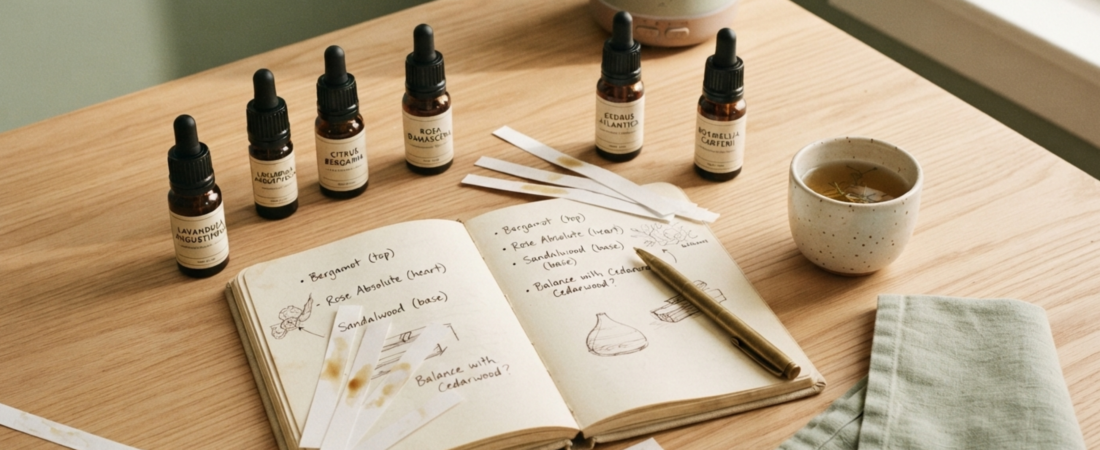
Walking into the world of essential oils can feel surprisingly overwhelming.
A quick search introduces hundreds of options. Lavender for sleep. Peppermint for focus. Lemon for energy. Eucalyptus for breathing. Frankincense for meditation. Before long, every oil seems to promise something different, and choosing one begins to feel more complicated than expected.
Many people respond by asking a simple question.
“What is the best essential oil?”
The more helpful answer is another question.
“What do you need today?”
Aromatherapy is often presented as though each essential oil has a fixed purpose, almost like matching a symptom to a single bottle. While certain oils have well-known properties supported by traditional use and scientific research, choosing an essential oil is rarely that straightforward.
People are different.
The same aroma that one person finds comforting may remind another of a hospital, a childhood memory, or a aroma they have never enjoyed. A scent that feels refreshing during the morning may feel overwhelming before bedtime. Preferences change with age, experiences, health conditions, and even the season of life someone is in.
That is why choosing an essential oil should begin with the person, not the bottle.
Instead of asking which oil is most popular, it helps to consider what kind of support would feel most helpful right now.
Perhaps the day has been mentally demanding, and the mind feels scattered after hours of meetings and responsibilities.
Perhaps evenings have become difficult because it is hard to transition from work into rest.
Perhaps the home simply feels heavy after several days indoors and would benefit from a brighter atmosphere.
These situations are different, and they may call for different aromas.
Beginning with your intention makes the choice much clearer.
There is another question worth asking alongside it.
“What kinds of scents do I naturally enjoy?”
People often assume they should learn to like certain essential oils because they are frequently recommended. In reality, aroma is deeply personal. An essential oil that feels unpleasant is unlikely to become part of a sustainable daily practice, regardless of its reputation.
Notice the aromas you are already drawn to.
Do fresh citrus scents make a room feel lighter?
Do soft floral aromas feel comforting?
Are earthy woods more grounding than sweet aromas?
Do herbal notes remind you of clean mornings or peaceful walks outdoors?
There is no correct preference.
The goal is not to choose the oil that someone else enjoys. It is to find one that feels welcoming enough that you will genuinely want to use it.
Starting with one or two oils is often wiser than buying an entire collection.
It can be tempting to purchase large sets because they appear to offer every possibility. The result is often a shelf filled with bottles that are opened once and forgotten. Aromatherapy becomes much less overwhelming when there is time to become familiar with a few carefully chosen oils before adding more.
This slower approach allows each aroma to become recognizable.
You begin to notice how it feels at different times of day. You learn whether it fits naturally into your routines. You discover whether you reach for it after a busy afternoon, during quiet evenings, or while preparing for the day ahead.
Choosing fewer oils often leads to using them more thoughtfully.
Safety should also be part of the decision from the very beginning.
Essential oils are highly concentrated plant extracts. Although they come from natural sources, natural does not automatically mean gentle or appropriate for every person. Age, pregnancy, existing medical conditions, medications, allergies, and the presence of children or pets can all influence which oils are suitable and how they should be used.
This is one reason responsible aromatherapy begins with understanding rather than collecting.
The bottle is only one part of the practice.
Knowing when to use it, how much to use, and whether it is appropriate for the situation is equally important.
Choosing well is less about owning more essential oils and more about understanding the few that genuinely support your daily life.
Once you have identified what you need and the kinds of aromas you naturally enjoy, the next step is surprisingly simple.
Resist the urge to buy everything at once.
Many beginners assume that a proper aromatherapy collection should include dozens of essential oils. Social media often reinforces this idea by displaying large shelves lined with bottle after bottle, each assigned to a different purpose. While these collections may look impressive, they are rarely necessary for someone just beginning.
A small collection that is well understood is far more useful than a large one that feels confusing.
Instead of trying to prepare for every possible situation, think about the moments you experience most often.
Perhaps mornings feel rushed and you would like something that helps the home feel brighter as the day begins.
Perhaps work leaves your mind feeling busy long after the laptop has been closed.
Perhaps restful evenings have become difficult because responsibilities continue to occupy your thoughts.
Perhaps you simply want your living space to feel calmer when you walk through the door.
These everyday situations are often where aromatherapy becomes most meaningful.
Rather than searching for an oil that promises to solve every problem, choose one that supports a routine you already have.
A citrus aroma may become part of opening the windows each morning.
A soft floral blend may accompany reading before bed.
An earthy or woody scent may help create a quiet transition between work and personal time.
When an aroma becomes connected to a familiar ritual, it gradually becomes more than a pleasant aroma. It becomes a gentle cue that reminds the mind and body of what comes next.
Over time, the scent itself begins to feel familiar because it is associated with repeated experiences of rest, focus, or comfort.
This is one reason consistency often matters more than constantly trying something new.
There is also value in paying attention to quality.
Essential oils are agricultural products. Their aroma, composition, and overall quality are influenced by many factors, including the plant species, where it was grown, the conditions of the harvest, and the method used to extract the oil.
Reading the label carefully is a good habit to develop.
A trustworthy product should clearly identify the botanical name, the plant part used when appropriate, and other information that helps you understand what you are purchasing. Clear labeling reflects a commitment to transparency and allows you to make more informed choices.
At the same time, it is helpful to remember that the strongest scent is not necessarily the highest quality.
Many people expect a good essential oil to smell intensely powerful the moment the bottle is opened. In reality, some oils have naturally softer aromas than others. Strength alone tells very little about quality, effectiveness, or suitability.
The goal is not to fill a room with aroma.
The goal is to use an appropriate amount for the person, the space, and the purpose.
More scent does not always create a better experience.
In fact, too much aroma can become distracting or uncomfortable. Constant exposure may make it difficult to notice the scent after a while because the nose naturally adapts to continuous smells. This is one reason shorter, intentional periods of use are often more enjoyable than having a diffuser running throughout the day.
Gentle exposure allows the aroma to remain noticeable while reducing the likelihood of sensory fatigue.
As you become more familiar with essential oils, you may notice something interesting.
The oils you reach for most are not always the ones you expected.
A bottle purchased for relaxation may become part of a quiet afternoon reading routine instead of bedtime. A fresh scent chosen for productivity may end up being your favorite aroma for welcoming guests into your home. Another oil may simply remind you of a place, a season, or a memory that brings comfort.
There is room for these personal experiences.
Aromatherapy is both practical and deeply individual. While chemistry, safety, and evidence provide an important foundation, personal preference also deserves a place in the conversation. The most thoughtfully chosen essential oil is one that is appropriate, safe, and enjoyable enough that you will actually use it.
There is no perfect collection to own.
There is no deadline for learning every botanical name or memorizing every constituent.
Aromatherapy is not something that needs to be mastered in a weekend.
Like many worthwhile practices, it grows through curiosity and experience. One bottle becomes familiar. Then another. Over time, confidence develops naturally because each choice is built on understanding rather than urgency.
Starting slowly also creates space to notice something that is easily overlooked.
An essential oil is not the wellness practice itself.
The bottle is a tool.
What creates value is how it becomes part of daily life.
A few quiet moments before the rest of the household wakes.
An evening routine that signals the workday has ended.
A familiar aroma while reading, journaling, stretching, or simply sitting still for a few minutes before the next responsibility begins.
These ordinary rituals often have a greater impact than constantly searching for the next product to try.
The purpose of aromatherapy has never been to build the largest collection.
It is to thoughtfully choose what supports your wellbeing, use it safely, and allow simple moments of care to become part of everyday life.
A gentle invitation
If you are just beginning your aromatherapy journey, you do not have to figure everything out on your own. At Tawhay, we believe that choosing an essential oil should feel simple, personal, and grounded in safe practice. Explore our collection of essential oils, blends, and wellness products on our website or visit our shop to find aromas that suit your routines and the season of life you are in. Sometimes, the best place to start is with a single bottle that feels right for you.