
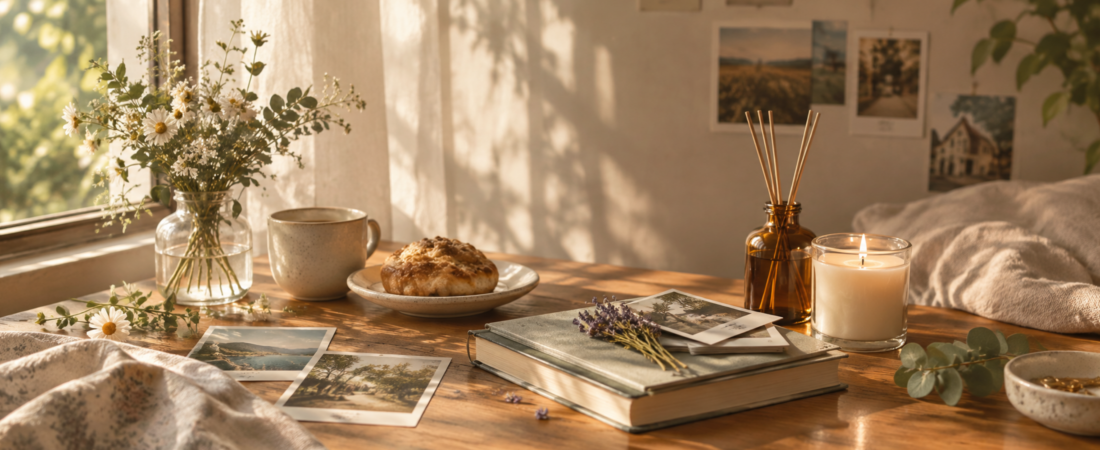
There are certain scents that seem to carry a story.
The smell of freshly baked bread can bring someone back to a childhood kitchen. A familiar perfume can suddenly remind us of a person we have not seen in years. The scent of rain, clean laundry, an old book, or a particular soap can bring back a moment we had not thought about in a long time.
Sometimes, the memory arrives before we even realize what triggered it.
Scent has a fascinating relationship with memory. We experience thousands of smells throughout our lives, but some become connected to particular people, places, routines, and moments. Once those connections are formed, encountering a familiar scent can sometimes bring an old memory back with surprising clarity.
This is partly related to the way the brain processes smell. Information about an aroma is processed in areas of the brain that have close connections with regions involved in memory and emotion. This helps explain why a scent can sometimes bring back a feeling or memory so quickly, without us deliberately trying to remember.
Think about the scents that have been part of your everyday life.
Maybe there is a particular dish that reminds you of home. Maybe the scent of a certain shampoo makes you think of someone you grew up with. Perhaps the smell of sunscreen brings back memories of family trips, or the scent of rain reminds you of afternoons spent indoors.
These connections are often built quietly.
When we experience a scent during an important or familiar moment, our brain can associate the aroma with everything happening around us. The people who were there, the place we were in, the emotions we felt, and the details of the experience can all become part of that memory.
Later, when we encounter the same scent again, some of those associations may return.
This is one reason a smell can sometimes feel surprisingly personal.
Two people can experience the exact same scent and have completely different reactions to it. One person may find the smell of roses comforting because it reminds them of a garden they grew up around. Another may associate roses with a completely different experience. A scent that feels warm and familiar to one person might feel ordinary or even unpleasant to someone else.
Our relationship with scent is shaped by experience.
This also means that our favorite scents are not always about what smells objectively pleasant. Sometimes, we like an aroma because of what it represents to us. It may remind us of a person we love, a place where we felt safe, a season we looked forward to, or a period in our lives that holds meaning.
There are also scents that become part of our routines without us consciously choosing them.
The smell of your favorite body wash in the morning. Fresh sheets at the end of a long day. The aroma of food cooking in the kitchen. A candle you light while reading. The scent of plants after watering them. A familiar perfume before leaving the house.
These small sensory experiences can become markers of everyday life.
Over time, they can help make certain routines feel familiar. A scent might become associated with bedtime, quiet mornings, cleaning the house, spending time outdoors, or simply having a few minutes to yourself.
This is one reason scent can be meaningful when creating personal rituals.
A ritual does not have to be elaborate. It can be something as simple as lighting a candle while journaling, using a favorite scented product during an evening routine, or opening a window and noticing the smells coming in from outside. The value is not necessarily in the scent itself. It can also come from the attention we give to the moment.
Aromatherapy is one way people intentionally bring scent into their everyday routines. Essential oils are concentrated aromatic substances derived from plants, and their aromas can be incorporated into different personal practices and environments. You do not need an extensive knowledge of aromatherapy to appreciate the sensory experience of an aroma you enjoy.
Starting with curiosity can be enough.
Instead of asking which scent you are supposed to like, you can begin by noticing your own preferences.
Do you naturally reach for fresh, citrusy scents? Do you prefer something floral or earthy? Do certain aromas make a room feel more inviting to you? Are there scents you associate with particular seasons, people, or places?
There is no single answer.
Personal scent preferences are just that: personal.
Sometimes, our preferences also change as our experiences change. A scent we loved years ago may no longer appeal to us. Another aroma may become meaningful because of something that happened recently. A new home, a new routine, a trip, a relationship, or even a particular season of life can introduce us to scents that eventually become part of our memories.
This makes scent an interesting part of how we experience our surroundings.
We often pay attention to what we see and hear, but smell can quietly shape how a place feels. The scent of a familiar home can feel different from the scent of a hotel room. The smell of a favorite restaurant can become part of the experience of eating there. Even the natural scent of a particular place can become something we recognize when we return.
Sometimes, we do not realize how familiar a place has become until we leave it.
Then, a similar scent somewhere else can suddenly bring it back.
Perhaps this is why certain scents can feel almost like little reminders of where we have been. They can connect the present moment with something that happened long ago, even when we were not actively thinking about it.
Of course, scent does not guarantee a particular emotional response or memory. People respond differently, and memories can be complicated. A scent that brings comfort to one person may bring sadness to another. Some memories may feel warm, while others may be difficult.
That personal connection is worth respecting.
There is no need to force a memory or attach a particular meaning to an aroma. Sometimes, a scent is simply something we enjoy. Other times, it becomes meaningful because of the memories we have attached to it.
Either way, noticing our response can be an interesting form of self-awareness.
The next time you encounter a familiar scent, try pausing before moving on.
What does it remind you of?
Who comes to mind?
Where do you imagine yourself?
Maybe it takes you back to a childhood home. Maybe it reminds you of someone you miss. Maybe it brings back a quiet afternoon, a family gathering, a favorite place, or a season of life you had almost forgotten.
You might even discover that some of the scents you love most are connected to ordinary moments rather than major memories.
A particular soap. Your mother’s cooking. Freshly washed clothes. The smell of books. Rain on the pavement. A familiar perfume. The aroma of your favorite meal.
These moments may seem small, but they become part of our lives all the same.
Scent reminds us that memory does not always arrive through photographs, conversations, or stories. Sometimes, it arrives quietly through the senses.
A familiar aroma can bring us back for a moment, giving an ordinary day a small connection to somewhere we have been before.
And perhaps that is what makes the scents we remember so special.
They are not simply aromas we recognize. They can become part of the stories we carry with us, waiting quietly for the next moment they return.